
Publikacje
A Neolithic ground stone tool as an Early Iron Age funerary gift
2022. Antiquity 96(390): 1621-1627. doi:10.15184/aqy.2022.124
Kufel-Diakowska Bernadeta, Chłoń Marcin, Baron Justyna
Abstrakt
The authors describe a Neolithic ground stone adze, retrieved from an Early Iron Age burial (c. 700–550 BC) at the urnfield cemetery in Miłosławice, south-western Poland. This artefact yields an interesting example of an extended tool biography.
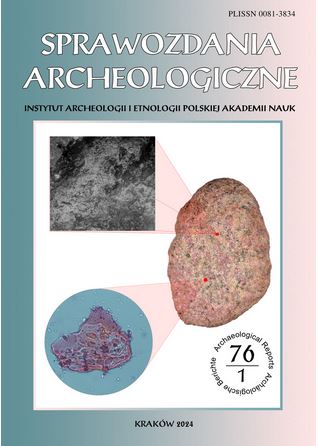
Hidden lithic treasures. Research perspectives on museum collections of the Neolithic stone tools
2024. Sprawozdania Archeologiczne 76 (1): 381- 403, https://doi.org/10.23858/SA/76.2024.1.3567
Kufel-Diakowska Bernadeta, Chłoń Marcin, Bronowicki Wojciech, Borowski Michał
Abstrakt
Museum collections contain numerous finds that do not attract the proper attention of researchers. The most common reason for this is the uncertain context of the finds or lack of precise identification. The main aim of this article is to indicate the research value of so called stray finds. The collection of Neolithic macro-lithic tools from two museums was subjected to multifaceted analysis combined with detailed archival query. The results allowed us to address two important aspects. At the level of objects, the use of microscopic observations proved the complexity and sometimes prolonged use-life of Neolithic tools. At the cultural level, the re-evaluation of stray finds introduces changes in the range of Neolithic settlements in south-west Poland.
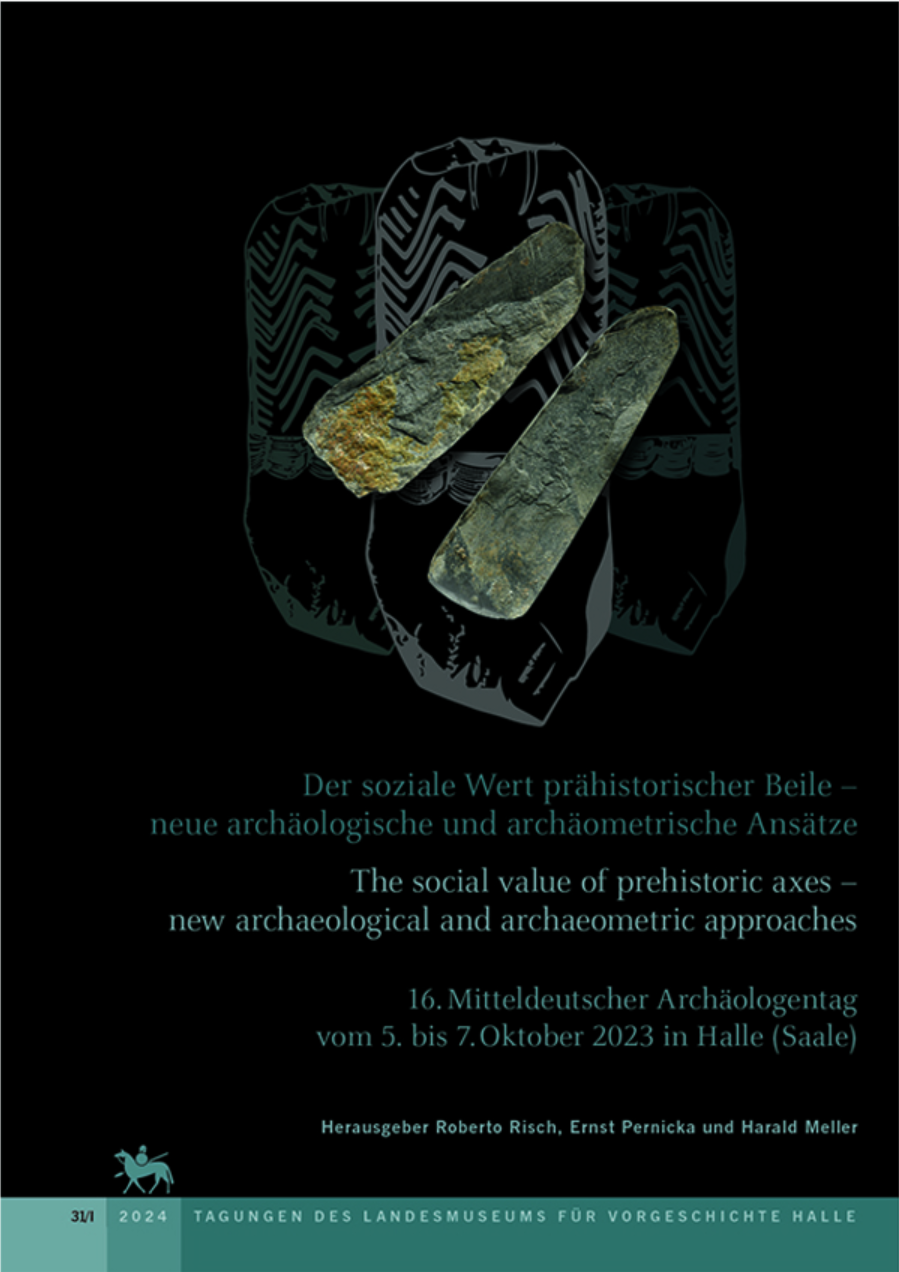
Procurement and circulation of lithic raw materials used for production of polished stone tools in Lower Silesia (SW Poland): some remarks on the state-of-the-art and new research perspectives
2024. In: Der soziale Wert prähistorischer Beile – neue archäologische und archäometrische Ansätze/The social value of prehistoric axes – new archaeological and archaeometric approaches, (Risch, R., Pernicka, E. & Meller, H., Eds.), Tagungen des Landesmuseum für Vorgeschichte Halle (Saale), 31/I: 181-200.
Borowski Michał, Kufel-Diakowska Bernadeta, Chłoń Marcin, Bronowicki Wojciech
Abstrakt
Thanks to its diverse regional geology as well as its rich archaeological record associated with a variety of Neolithic and Eneolithic communities, Lower Silesia should be considered a very interesting but also a particularly challenging area for provenance studies of raw materials used in the polished stone tool production. Unfortunately, in southwestern Poland, this field of research has largely been at a standstill for almost two decades. The aim of this paper is not only to familiarise the wider international audience with a selection of the most interesting outcomes of the 20th-century studies conducted in this area but also to discuss the preliminary results of the ongoing project and suggest some further research directions.
In memoriam: Alfred Majerowicz (1925-2018) and Włodzimierz Wojciechowski (1932-2018)
Early Neolithic grinding practices in central Europe: A case study from the LBK micro-region in southwestern Poland
2025. Journal of Archaeological Science: Reports, Volume 62, 105016, ISSN 2352-409X, https://doi.org/10.1016/j.jasrep.2025.105016.
Bernadeta Kufel-Diakowska, Marcin Chłoń, Aleksandra Gawron-Szymczyk
Abstrakt
Macro-lithic stone tools were a part of the so-called Neolithic package introduced by the first farmers north of the Sudety Mountains and Carpathians in the 2nd half of the 6th millennium BCE. In the early communities of the Linear Pottery Culture (LBK) in today’s southwestern Poland, two general traditions are noticed when selecting raw materials for their production. The first tradition is evidenced by axes and adzes made exclusively of metabasite from the Bohemian Massif in Sudety as far as 200 km south. On the other hand, grinding and abrading tools used for processing various products and tool manufacturing were made of locally accessible selected rocks and erratic resources.
This paper focuses on the production and use of different grinding and abrading tools from the LBK microregion in southwestern Poland (Lower Silesian cluster). The collection consists of 80 implements grouped into a few categories: passive querns and grinding slabs/anvils, active grinders, handstones, hammerstones, grooved abraders and polishers. To study strategies for selecting and processing patterns of locally accessible raw materials, we studied morphometric characteristics and use-wear and residue analysis combined with experimental data. Our research showed that the methods of production and utilisation of grinding and abrading tools in grain processing, edge tools manufacturing and repair, as well as deposition patterns of querns and grinders at the settlements in the Lower Silesian cell, are similar to southern and north-western regions of the LBK occupations. That shows similar technological traditions among the first farmers and their similar patterns of adaptation to the local environments.
From axe to grooved stone: Evidence of recycling practices in the Neolithic
2025. Journal of Lithic Studies, Volume 12(1), 19 pp., https://doi.org/10.2218/jls.10717
Wojciech Bronowicki, Adam Kobyłka, Marcin Chłoń, Bernadeta Kufel-Diakowska, Marta Tobiasz
Abstrakt
This paper examines the recycling and reuse of Neolithic stone tools, with a focus on a modified shaft-hole axe fragment discovered at Wierzbie, southwestern Poland. The study involved technological and use-wear analysis, supported by 3D modelling, to trace the life cycle of this tool and its transformation into a grooved stone. Stone tool recycling in prehistoric times often involved practices like edge resharpening and the adaptation of damaged tools, reflecting a pragmatic approach to resource management. The modified axe from Wierzbie illustrates a shift in tool function, highlighting a broader trend of reusing Neolithic implements, particularly in Late and Final Neolithic and Early Bronze Age contexts.
The tool’s chronology was determined through detailed morpho-typological analysis and 3D model comparisons with complete Corded Ware culture (CWC) shaft-hole axes, confirming its origins within the CWC. The axe made from diabase was modified after it was damaged. The unusual nature of its modification suggests it was likely recycled during the Final Neolithic or Early Bronze Age, possibly linked to the Bell Beaker culture. This is supported by similar grooved stones used as shaft straighteners in Central Europe, particularly within Bell Beaker contexts. Microscopic analysis of the tool’s surface reveals wear patterns consistent with its new function, including polishing and striation marks associated with shaping plant-derived material.
The results of this study highlight the adaptive strategies employed by prehistoric communities to prolong the lifespan of tools and materials, influenced by cultural and economic factors. This study highlights the complex life cycle of stone tools, demonstrating that recycling was not merely a functional necessity but also a culturally ingrained practice that helped maintain valuable resources within specific social and economic spheres. Through this lens, the Wierzbie artefact offers important insights into the technological ingenuity and material culture of prehistoric societies in Central Europe.